Human beings used natural dyes from prehistory up to the 19th century, when their use was displaced within only a few years by the newly invented aniline dyes. Even the ancient inhabitants of the Canary Islands embellished their clothing with bright colors, as the chronicler Torriani attests.
Today, we are more and more alienated from the origins of the objects that surround us, and this goes for textiles too. Thus, learning how to handle natural dyes is a way to awaken our curiosity and learn not only about the history and nature of our environment but about our culture, too.
A student of the renowned dyer Nilia Bañares, I have been teaching people about natural dyes for several years, both for institutions, such as FEDAC and the Cueva Pintada museum, and in my own workshop. I have also offered dye courses for groups, such as the elderly and young immigrants, and even for people wishing to celebrate a friend or relative’s birthday in a different way. Would you like me to hold another workshop?
If you decide to participate in one, I guarantee you will not only have a unique artistic cultural experience, but you will also end up with a very personal memento, made with your own hands from natural products and crafted with your own artistic sensitivity.
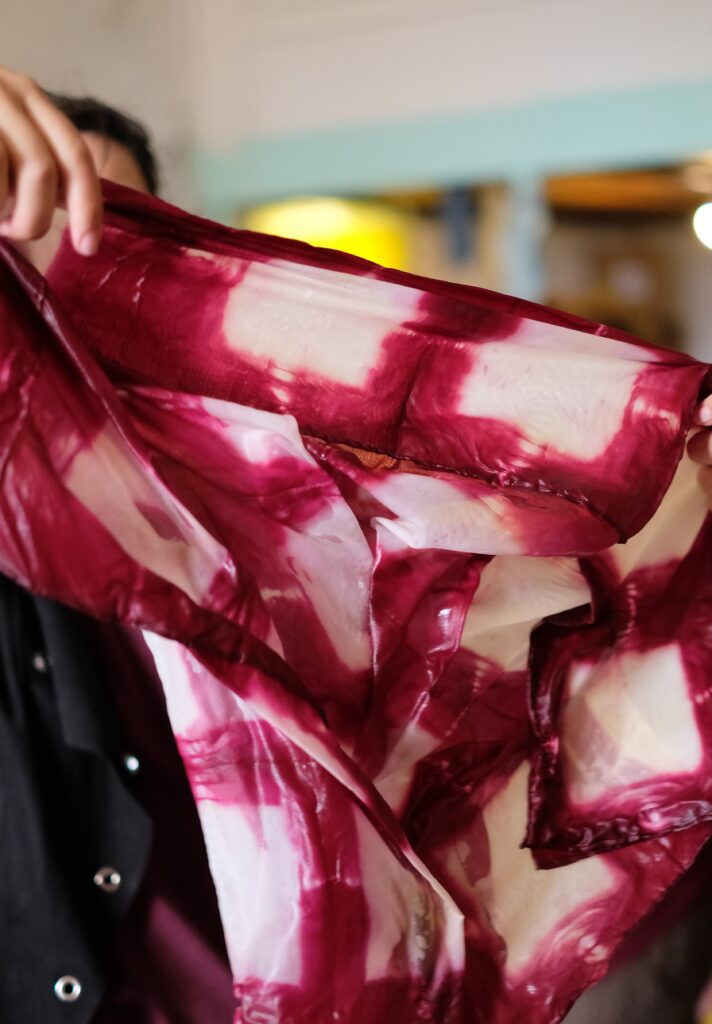
In this workshop, you will be given a blank silk scarf to experiment with and explore the fascinating world of the cochineal, which is a small insect found on the prickly pear cacti and one of the most important natural sources of a wide range of reds and pinks. It was for this reason that cochineal held a great importance for the Canarian economy in the 19th century. The natural dye will be used in combination with shibori; the gatherings and folds made during this Japanese tie-dyeing process can take the textile to the third dimension.
Would you like to create your own work of textile art and take home a souvenir created with original color from the municipality of Ingenio?
A la carte course: minimum 3 participants
Duration: 4 hours
Price: €65 per person, including all materials and refreshments
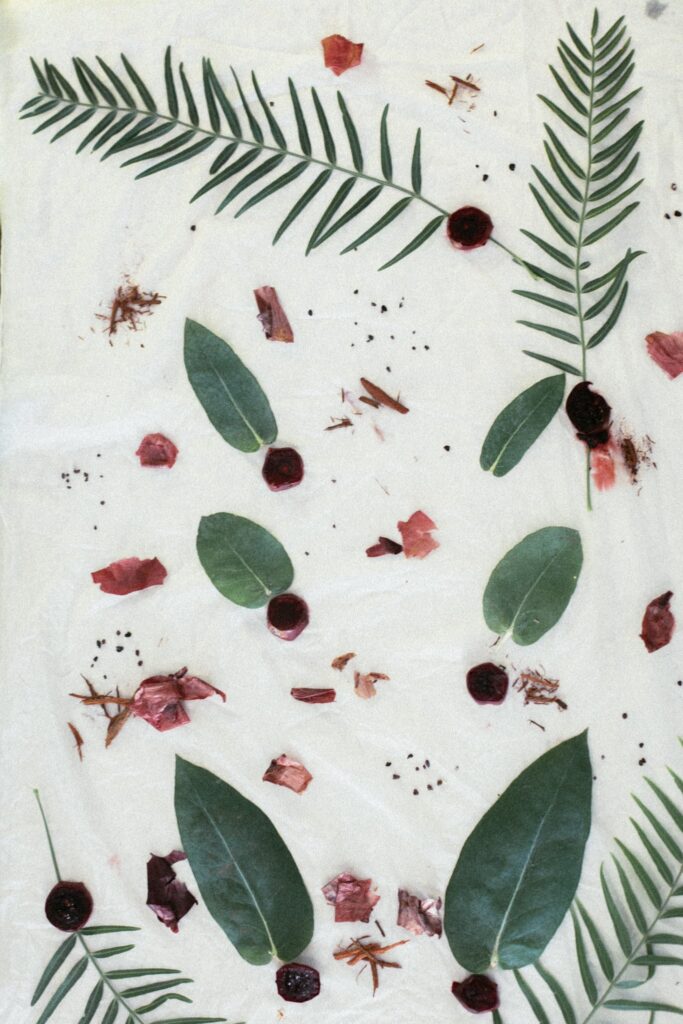
With the botanical printing technique, also known as ecoprinting or bundle dyeing, the pigments of various dyeing materials are transferred directly onto the textile. I will give you the opportunity to experiment and design unique prints with all types of natural materials, such as leaves, flowers and tree bark, which we will collect during a short walk near my studio.
You will take home a unique souvenir from your stay in Gran Canaria!
A la carte course: minimum 3 participants Duration: 4 hours Price: €65 per person, including all materials and refreshments